
Shaded & Shell Maine Coon Genetics: Why Pedigree Diversity Matters

Shaded and shell come from a relatively small pedigree world
Among breeders who have spent years tracing shaded and shell pedigrees, you will often hear discussion of roughly 8 distinct lines or branches behind much of the shaded and shell population.
I want to be very clear about that wording: “8 lines” is breeder pedigree shorthand, not a published scientific count of the worldwide shaded Maine Coon population. It comes from breeders tracing these pedigrees generation after generation and identifying branches that remain separate for a number of generations before eventually connecting farther back.
That distinction matters to me because I never want to turn breeder observation into “science” just because it makes a good caption.
What is well established is the larger genetic principle: when a relatively small breeding population repeatedly uses the same individuals or families, those ancestors can become disproportionately represented in future generations. That reduces the number of genuinely different pairing options available later.
A 2022 review on feline fertility and inbreeding notes that detailed pedigree analysis and inbreeding calculations are important when designing breeding programs, and that a four- or five-generation pedigree can look relatively low in inbreeding while a deeper pedigree reveals much more shared ancestry.
Read the veterinary review on feline inbreeding and reproductive fitness
Think of it like branches on a family tree
Imagine you start with several different branches of a tree. If breeders continue using cats from all of those branches thoughtfully, there are more directions available when planning future generations. But if one branch becomes extremely popular, more breeders begin using cats from that same family. Those cats produce breeding cats. Their offspring produce more breeding cats. Those descendants are exported to other countries and bred into pedigrees that may look completely different several generations later.
Eventually the issue is not that the original family was “bad.”
The issue is that it became very heavily represented.
This is closely related to what population geneticists describe as a popular-sire effect: when a small number of breeding animals contribute disproportionately to future generations, genetic diversity can be lost even when the overall number of cats being produced is large.
And it does not have to stay confined to one famous male. Once several siblings and their descendants are used widely, an entire family can spread through the population.
The family we deliberately choose not to work with
I am comfortable naming the pedigree because I believe breeders should be able to research these things for themselves. The family we have chosen not to incorporate into our breeding program descends from offspring produced by:
Alwaro W’Volcano × Alwaro Vera Crus.
This is not me saying these cats were unhealthy, defective, or “bad.” It is not a claim that every descendant has a problem. And finding one of these cats in a pedigree does not tell you everything you need to know about the cat standing in front of you.
Our concern is representation and long-term genetic diversity.
One of the best-known offspring from this pairing is Alwaro Zacco, a black silver shaded male born in 2016. Public pedigree records identify Alwaro W’Volcano as his sire and Alwaro Vera Crus as his dam.
View Alwaro Zacco’s pedigree record
But Zacco is only one member of this family. Other registry records document additional offspring from the same W’Volcano × Vera Crus pairing. For example, Alwaro Cameron and Alwaro Challanger are both recorded with the same sire and dam.
When I reviewed the pairing in PawPeds, the database showed 19 recorded offspring from W’Volcano × Vera Crus. That is important because searching only for “Zacco” can miss the same family coming through one of his siblings instead.
It is also why I use the wording “recorded offspring.” PawPeds itself explains that an offspring list contains the offspring it has in its database. Pedigrees are voluntarily submitted to the database, so it should not be treated as a perfect census of every cat ever bred.
PawPeds User Guide: offspring lists, reverse pedigrees and pedigree analysis
PawPeds also explains that it prefers certified pedigrees when adding information because the reliability of online pedigree information can vary.
PawPeds: submitting Maine Coon pedigrees and database information
The ancestry does not stay “shaded”
This is one of the biggest misconceptions I see when people first start learning pedigrees. A pedigree does not stay attached to a colour. A shaded cat can be bred to a tabby. A descendant can be kept and bred again. Several generations later, you may be looking at a smoke, silver, brown tabby, solid, or another colour entirely while the same ancestor is still sitting farther back in the pedigree.
There are public registry examples where descendants of the W’Volcano × Vera Crus family appear several generations behind cats that are not shaded or shell themselves.
That is why a completely different colour does not necessarily mean a completely different pedigree. You cannot reliably determine ancestry by looking at the cat. You have to read the pedigree.
Why we look back 10 generations
This is also why the first three or four generations are not enough for me when I am evaluating a potential breeding cat.
Sometimes I fall in love with the cat first.
Then I open the pedigree.
And most times the pedigree ruins my fun 😂
At DiamondiCoons, we trace pedigrees back 10 generations or more when the information is available. I am looking for repeated ancestors, heavily represented families, how the two sides of a pedigree fit together, and what that cat could mean for future generations in our program.
This is not an arbitrary number I invented.
The Governing Council of the Cat Fancy’s Maine Coon Breeding Policy recommends calculating inbreeding over at least 10 generations where possible, and ideally using as many complete generations as possible. It also specifically recommends PawPeds as a tool for evaluating planned matings.
Read the GCCF Maine Coon Breeding Policy
The veterinary literature makes a similar point: a shorter pedigree may appear to have a low coefficient of inbreeding while a deeper pedigree reveals substantially more shared ancestry.
That is why you will sometimes hear me say:
Pretty is the easy part.
A cat can have the exact colour, head, profile, ears and overall look I love and still not be the right cat for our breeding program.
COI matters, but it is not the entire pedigree
COI stands for coefficient of inbreeding. In simplified terms, it estimates the probability that two copies of a gene are identical by descent from a shared ancestor. It is a useful number. I absolutely pay attention to it. But I do not believe a pedigree should be reduced to one percentage.
I also want to know:
- Which ancestors are repeating?
- How often are they repeating?
- How recently do they appear?
- Is one family contributing disproportionately to the pedigree?
- What does the other side of the pedigree bring?
- If I keep a kitten, what breeding options will that kitten have later?
- What am I adding to the breed rather than simply reproducing what is already everywhere?
Research in cats has associated increasing inbreeding with reproductive consequences once inbreeding becomes sufficiently high, including reduced fertility, smaller litter sizes and increased neonatal illness or mortality. That does not mean a single pedigree percentage predicts an individual cat’s health. It means population management and thoughtful breeding decisions matter.
Feline Fertility: Consequences of Inbreeding and Implications for Reproductive Fitness
A more recent peer-reviewed paper on feline pedigree management also describes the coefficient of inbreeding as a tool for estimating identical-by-descent alleles and emphasizes monitoring pedigrees to help preserve genetic variability in breeding populations.
From Pedigrees to Practicality: An Interactive Tool for Cat Breeding
Genetic diversity is not the same thing as breeding for the lowest number possible
This is another place where I think nuance matters.
My goal is not to chase a 7% COI at the expense of everything else.
Purebred populations exist because breeders have selected and, at times, concentrated particular traits. Some shared ancestry is inevitable in established breeds.
The goal is to understand what is happening in the pedigree and make deliberate decisions rather than accidentally concentrating the same ancestry over and over because everyone is chasing the same popular look.
A low number on the screen does not automatically make a mating good.
And a higher number does not tell you everything about a pedigree without context.
I want to understand why the number is what it is.
This philosophy is bigger than shaded and shell
Shaded and shell pedigrees are what originally sent me down this rabbit hole, but this is not a “shaded cats only” philosophy. Not every cat in our program is shaded or shell. We care about genetic diversity across our entire Maine Coon breeding program.
When I evaluate a breeding cat, I am thinking about much more than whether I personally think that cat is gorgeous.
I am thinking about health.
Temperament.
Structure and breed type.
Health testing.
Pedigree.
Genetic diversity.
And what that cat allows us to do two, three, or more generations from now.
Finding a cat that checks every box is considerably harder than finding a pretty Maine Coon.
That is kind of the point.
Why preserving options matters to me
I am not going to pretend one small cattery in British Columbia can control the future of the Maine Coon breed. We cannot. No single breeder can. But every breeder contributes something to the population. When we produce a cat that later enters another breeding program, our decisions can become part of pedigrees we will never personally breed. That makes me think differently about what we do today.
I do not want to preserve shaded and shell Maine Coons by simply producing more shaded and shell Maine Coons.
I want to preserve options.
I want breeders years from now to still be able to find genuinely different pedigrees to work with.
I want beautiful Maine Coons.
I want healthy Maine Coons.
I want incredible temperaments.
I want cats that look unmistakably like the breed they are supposed to be.
And behind all of that, I want as much useful genetic diversity left in the population as we can reasonably preserve. Because the rarest part is not always the colour you can see. Sometimes it is what you cannot see until you start looking generations behind it.
A note about pedigree research
Pedigree databases are incredibly useful tools, but no database should be treated as infallible or perfectly complete. PawPeds explains that offspring lists contain the animals currently present in its database and that pedigree information is submitted for inclusion. It also notes that online pedigree information can contain errors and that certified pedigrees are preferred when possible.
For that reason, when I discuss numbers of recorded offspring or descendants, I mean exactly that: the animals that can currently be documented in the sources I am using.
Likewise, references to approximately eight shaded and shell “lines” reflect breeder pedigree research and terminology rather than a peer-reviewed population study establishing exactly eight genetically discrete groups.
I think being transparent about the limits of our information is just as important as sharing what we have learned.
Want to research further?
Know someone who’d love this? Send it their way.
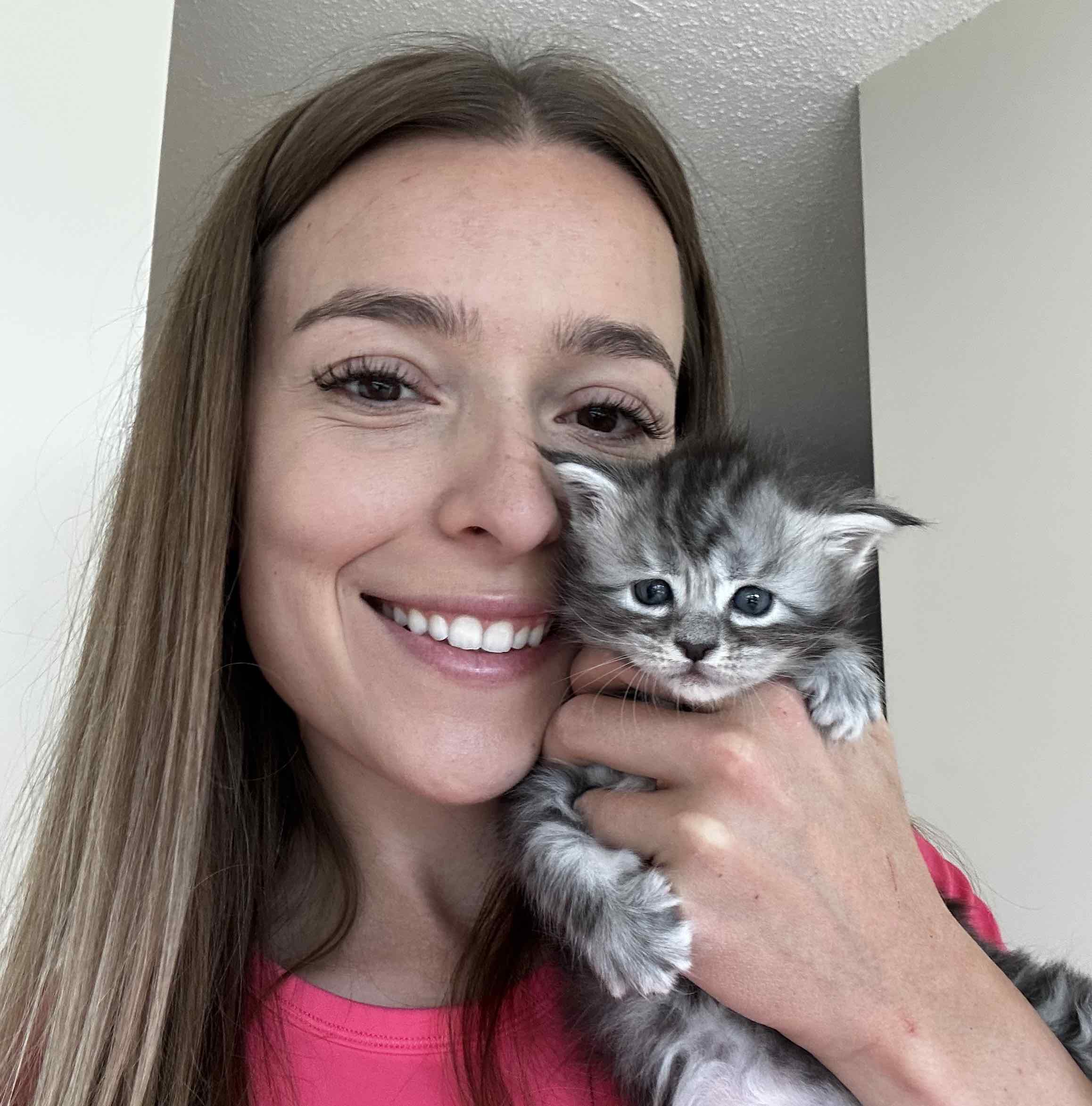
I’m Mila, the breeder behind DiamondiCoons. I’m a TICA registered Maine Coon breeder in British Columbia, Canada, and a PawPeds G1 graduate. I’m a little obsessed with the nerdier side of breeding ( pedigrees, genetics, health testing, breed type and preserving genetic diversity ), but just as much with raising confident, well-socialized kittens with incredible temperaments.
Here, I share what I know and continue to learn about the breed, while helping future kitten families and Maine Coon owners better understand everything from choosing a breeder and health testing to kitten development, care, behaviour and life with a Maine Coon. DiamondiCoons is very much a team effort with my husband, Kyle, who is involved behind the scenes in raising our cats and kittens alongside me.
2 Comments
Comments are closed.
great read thank you!
testing